

Events
-
-
Who are the Tanguts and why do they matter? Writing, Religion, and Cultural Exchange in the Xia Kingdom
Royce 243The Tangut Xia kingdom flourished in the Ordos region and the Gansu Corridor between the eleventh and thirteenth centuries. This talk will provide an introduction to the Tangut Xia kingdom, its unique writing system, and its dynamic religious traditions, highlighting the complex Chinese and Tibetan cultural interactions that shaped its historical development. By integrating elements...
-
EVENT POSTPONED: The Complex Interplay of Religion, Law and Politics in Israel
Bunche Hall 10383We regret to inform you that this March 9th on-campus event featuring Orly Erez-Likhovski as been postponed, as the speaker is unable to fly to us from Israel due to the war with Iran. We will notify you when/if we can host this event in the future. ______________________________ Without the protections of a written constitution...
-
-
The Dread Heights: Tribulation and Refuge after the Syrian Revolution
Bunche Hall 10383Muslim charities and community organizations have assumed a significant role in refugee support since the Syrian catastrophe: in Jordan and Canada, as elsewhere, they deliver food aid, house orphans, and organize remedial education. But Islam is more than just a resource for humanitarian projects. The Dread Heights details how the Islamic tradition guides refugees, relief...
-
-
Music and Religion in Popular Culture: The Case of Orthodox Jews and Christian Contemporary Music
Kaplan 365Since the 1960s religious practitioners have created their own music to express their beliefs and values to shield the community from popular culture. The Irony is they use the popular culture that they reject from American culture in their music. This presentation by Mark Kligman (UCLA) will highlight important composers and groups with audio and...
-
Gods and the Abyss: Encountering Oceanic Agency at the Edge of the Ancient World
Kaplan 365This presentation examines how coastal communities in antiquity conceived of the sea not merely as a physical environment, but as a powerful, living force endowed with agency. Such perceptions became especially vivid in the aftermath of coastal catastrophes. The Gulf of Cádiz, on the southwestern edge of the Iberian Peninsula, serves as the primary case...
-
(De)medicalization and the Dying Body: Sallekhanā, Kinship, and the Limits of Liberal Bioethics
Royce Hall 306In this talk, Miki Chase (U of Wisconsin-Madison) explores how trajectories of illness and care, such as terminal cancer or anticipated cognitive decline, are reinterpreted through Jain doctrinal frameworks in the narratives of adult children of women who undertake the Jain ritual fast to death (sallekhanā or santhāra). Drawing on ethnographic accounts of women’s deaths...
-
-

Study of Religion Welcome Reception
Royce Hall 306Lift a glass to the new academic year and meet friends old and new! Welcome remarks by Dean Stern and Professor Bakhos at 4:30p. RSVP required by October 11. See you there!
-
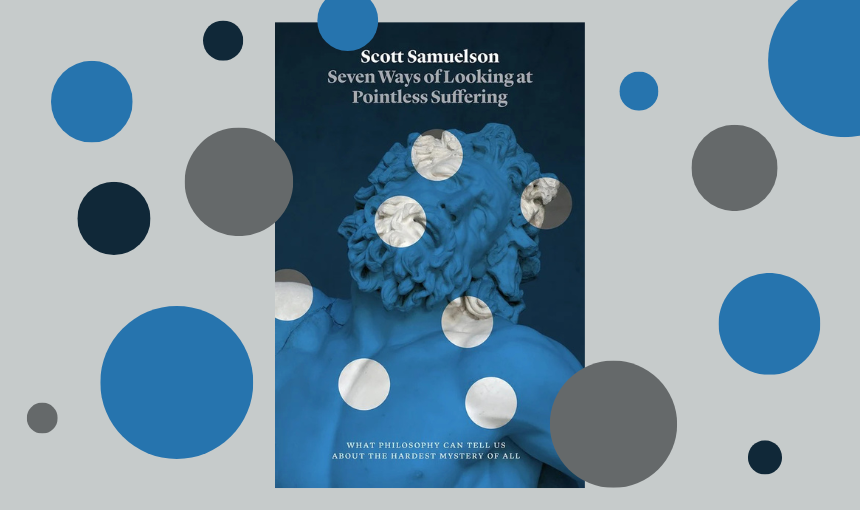
The Paradox of Pointless Suffering
Royce Hall 306Why do we suffer? Why do people die young? Is there any point to our excessive pain, physical or emotional? This talk explores the ways that we have tried to minimize or eliminate suffering, and examines people’s attempts to find ways to live with pointless suffering. Ultimately, to be fully human—and to have healthy culture—means...
-
-
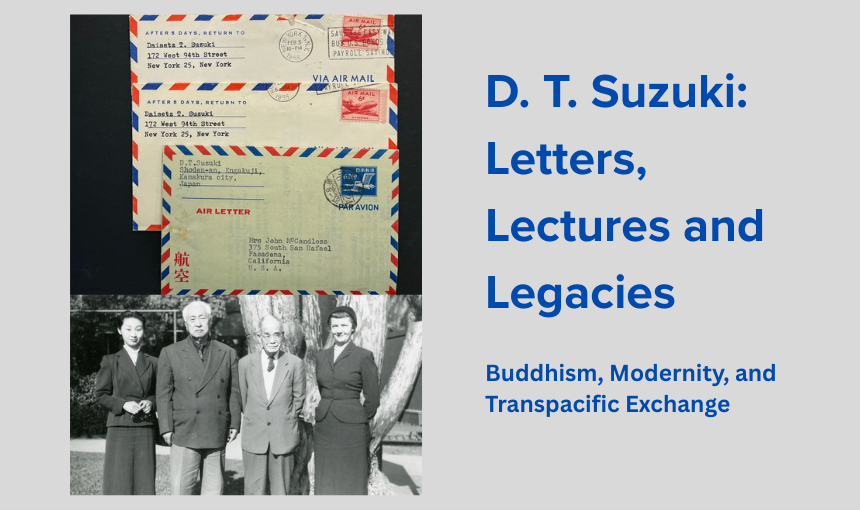
D. T. Suzuki: Letters, Lectures and Legacies
Charles E. Young Research Library, Main Conference Room 280 Charles E Young Dr N, Los Angeles, United StatesThis Workshop explores the cultural, religious, and intellectual legacy of Daisetsu Teitaro (D. T.) Suzuki (1870–1966), the preeminent figure who introduced Zen and Mahayana Buddhism to the modern Western world. This event brings together scholars, curators, and practitioners to discuss and reflect on Suzuki’s polymath contributions and their enduring, cross-cultural impact. Discussions will span a...
-

Upheavals of Faith: Deconversion, Value Conflict, and Grief
Kaplan 365Why do people grieve a faith they have chosen to leave? If they no longer believe, what exactly have they lost? Ultimately, leaving a religion is rarely the simple loss of a world. Recent philosophical work has argued that deconversion can be an occasion for grief, comparable to bereavement in its power to unsettle one’s...